
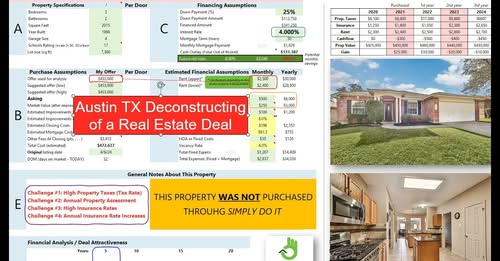
Austin TX Behind the Scenes of a Real Estate Deal – Deconstructing – Real Case Study
Dani Beit-Or analyzes a real estate deal in Austin, discussing the challenges of high property taxes and low rental returns, urging caution for investors.
more on our Podcast: bit.ly/guidedpodcsts
more on YouTube: bit.ly/sdi_sub
Highlights
 Danny deconstructs a real estate deal in Austin.

- Highlights issues of low rental income versus high purchase price.

- Warns about high property taxes impacting cash flow.

- Discusses the potential for appreciation but with caution.

- Encourages due diligence before investing in Austin.

- Suggests holding on to properties for long-term benefits.

- Recommends considering 1031 exchanges for better investment options.

Key Insights
- Rental Income vs. Price: The rental income from the analyzed property is low compared to its purchase price, indicating a poor investment return. This disparity highlights the importance of evaluating rental yields before investing.
- High Property Taxes: Texas has high property tax rates, which can significantly erode cash flow, especially for properties with already low rental income. Investors should factor in tax implications when assessing profitability.

- Appreciation Concerns: While potential for property value appreciation exists, it is not guaranteed. Investors must be prepared for the possibility that values may stagnate or decline in the short term.
- Long-term Investment Strategy: Holding onto the property for 10+ years may eventually yield positive results, but this requires financial resilience to support negative cash flow during the interim.

- Market Research: Investors are encouraged to conduct thorough market research and not to invest based solely on trends or peer influence. Informed decisions based on data can lead to better outcomes.

- 1031 Exchange Benefits: For those experiencing poor cash flow, a 1031 exchange could provide an avenue to reinvest in more favorable markets, leveraging equity effectively.
- Mindful Investing: This case serves as a cautionary tale for investors to critically evaluate real estate opportunities and avoid emotional or impulsive decisions.
